Assess before correcting
Every vehicle is read before it is touched: paint type, condition, age, prior correction, and originality. Aggressive correction is never the first step.
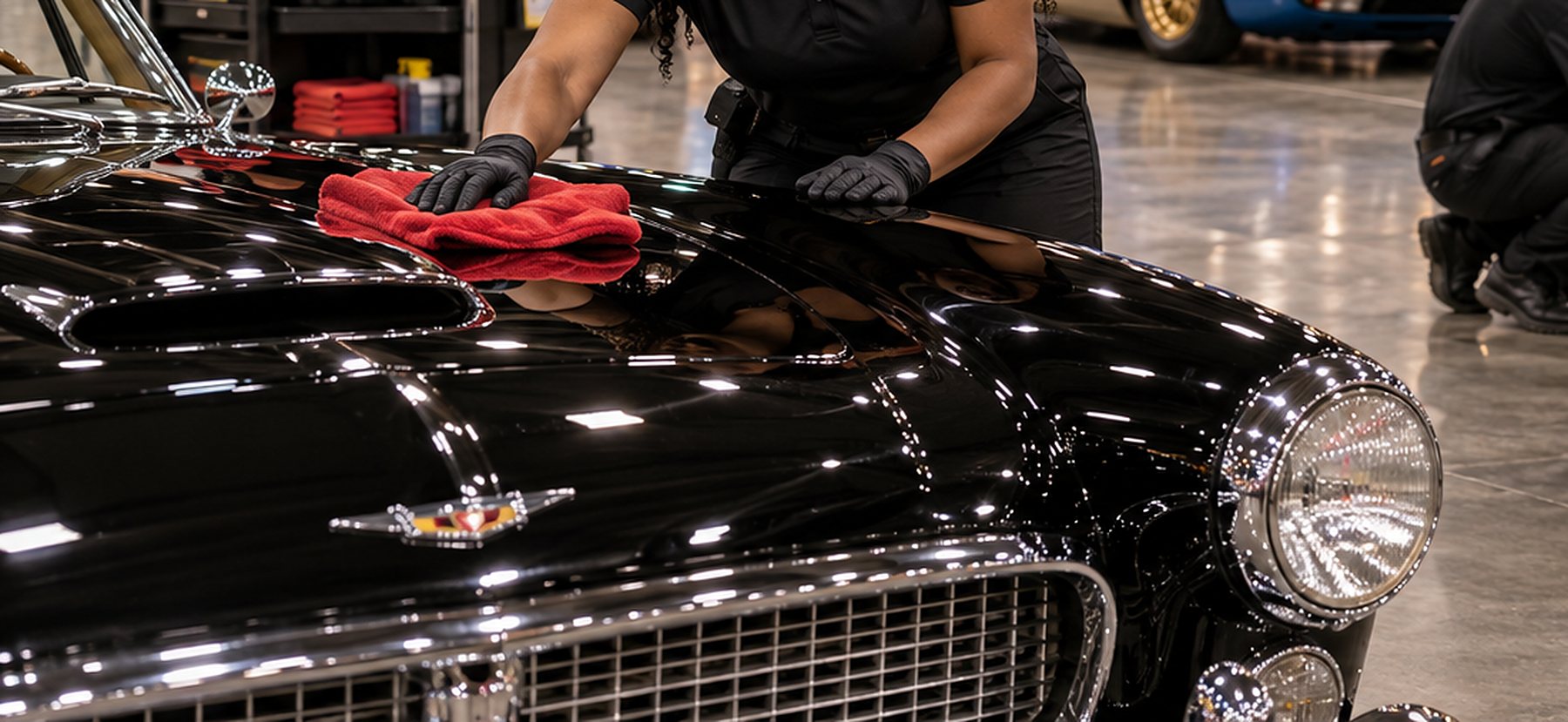
Paint correction and finish preservation for luxury, exotic, classic, and collector vehicles, guided by the eye and judgment of a master with 50+ years of hands-on automotive finish knowledge.
Ordinary detailing works toward an immediate result: a clean, glossy vehicle today. Preservation works toward a longer one. It asks what the finish is, how much of it remains, what it has been through, and what it will need to look right for decades.
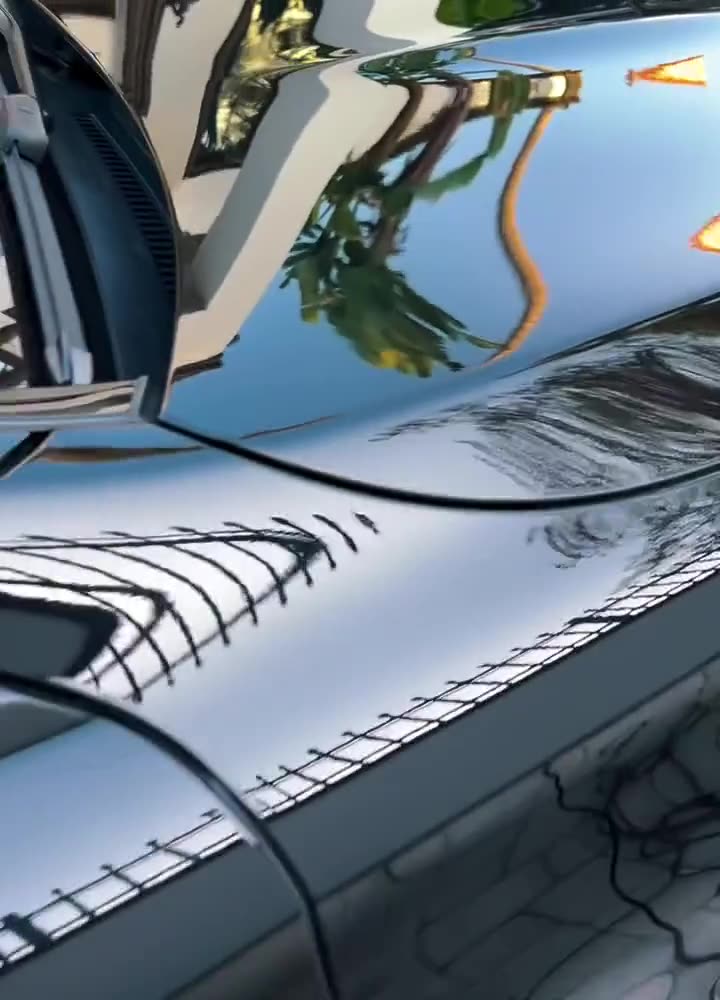
Paint is finite. Every aggressive pass of a machine removes material that never returns, and on an original or period finish that material is part of the vehicle's history and its value. A preservation approach treats correction as a decision, made carefully and only as far as the finish can safely give.
| Aspect | Ordinary detailing | Preservation |
|---|---|---|
| Goal | Shine today | Gloss, depth, and clarity that last, with originality intact |
| Starting point | The process | The assessment |
| Correction | As much as it takes | As little as necessary |
| Method | The same for every car | Chosen for each finish, age, and paint type |
| Measure of success | How it looks at pickup | How it looks, and the value it helps protect over time |
Chuck Mason began preserving automotive finishes in 1975 and formally established Wet Look in 1979. The standard that carries the name rests on four principles.
Every vehicle is read before it is touched: paint type, condition, age, prior correction, and originality. Aggressive correction is never the first step.
The least invasive method that achieves the result is the right one. Original material is protected wherever possible.
The finish should look deep, clear, and correct for the vehicle, as it was meant to look, and never merely shiny.
No two finishes behave alike. Five decades of hands-on work inform when to correct, how far to go, and when to stop.
Every engagement is master-led, performed by Chuck Mason or by crews trained directly by Chuck Mason or working under the Chuck Mason Wet Look standard.
A careful evaluation before any work begins: paint type and condition, defects, evidence of prior correction or refinishing, and the owner's goals. The assessment determines the plan.
Measured removal of swirls, scratches, oxidation, and haze, taken only as far as the finish safely allows. The aim is clarity and depth with the most original material retained.
Many classic and collector vehicles carry single-stage paint, with no clear coat above the color. Where appropriate, they receive methods suited to their age and composition, with originality as the priority.
Once corrected, the finish is protected to hold its gloss, using Wet Look products developed from real-world preservation work and used for years in Chuck Mason's own practice.
Wheels, glass, brightwork, trim, and interior surfaces are brought to the same standard, so the vehicle presents as a whole.
Owners and collection staff receive clear guidance on maintaining the finish between engagements, protecting the result and the vehicle's long-term value.
Paint correction, real work
Finish preservation, real work
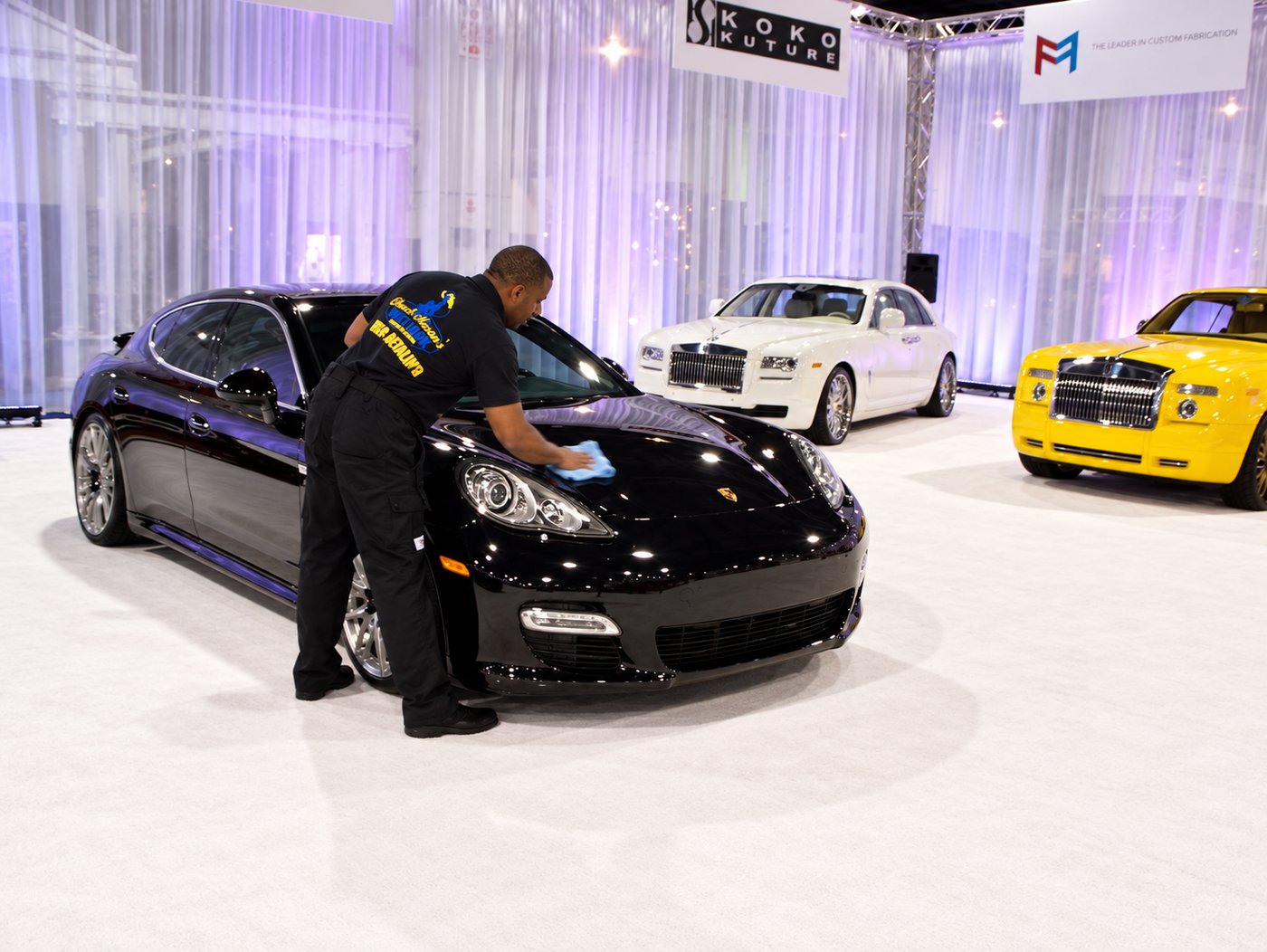
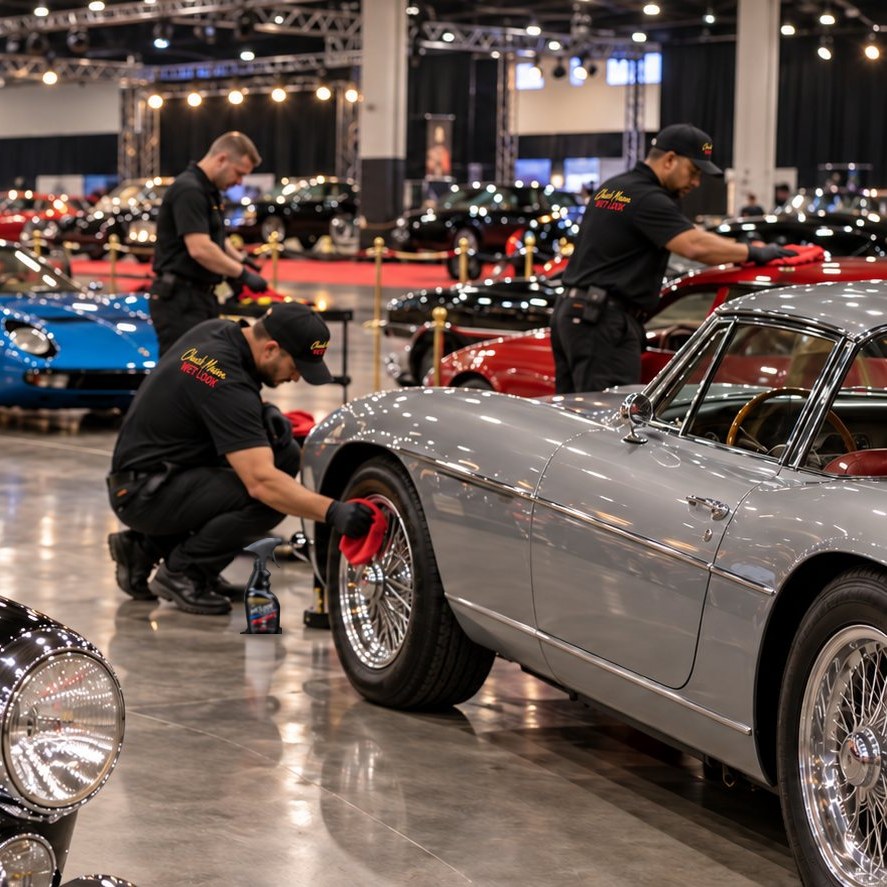
Every engagement begins with an assessment and a conversation about the vehicle and your goals for it. Engagements are available nationally by arrangement.